

Carbon Offsets
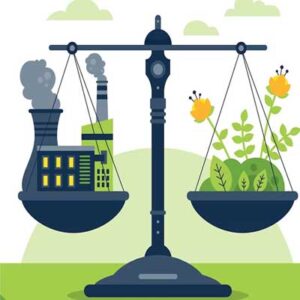
One of the many ways we are encouraged to reduce our carbon footprint is to offset our carbon emissions. If you search on the internet for carbon offsets no end of organisations provide ways of doing this, both for businesses and individuals.
Download a pdf of the article published in The Cottage 2024-03 Carbon Offsets
So what is carbon offsetting? It is defined as offsetting your carbon emissions by paying towards projects that remove carbon dioxide and other greenhouse gases from the atmosphere elsewhere. This means you effectively reduce your carbon emissions. One area where carbon offsets are commonly available is for air travel. Most airports and airlines have an option when booking flights to purchase carbon offsets. For example for a return flight for one person from Exeter to Malaga, Spain (approximately 1500 km/930 miles) it is possible using one web site to offset these emissions at a cost of £10.79. The total carbon emissions for this flight are about 10% of a person’s recommended annual carbon footprint and so in theory for just over £100 you could offset all your annual carbon emissions.
So is carbon offsetting effective? There is now a significant industry involved in offering carbon offsets, but it is largely unregulated. The most common projects you can contribute towards involve forestry, tree planting or preventing the removal of trees, the provision of efficient cooking stoves or the installation of renewable energy. Usually these projects are in another part of the world and have an impact on their local communities. This impact may not be beneficial. For example it may reduce the land available for local food production. However the most significant questions are would these projects have happened anyway, and so are you reducing the amount of carbon emitted, and are the calculated offsets realistic? Also, it does not reduce the demand for fossil fuels and encourages a ‘business as usual’ attitude in the hope that reductions occur elsewhere. Research by Carbon Brief (an award-winning UK-based website covering the latest developments in climate science, climate policy and energy policy) has shown that just over 70% of projects they examined caused harm to local communities and in 43% of cases they found evidence of projects overstating their ability to reduce emissions. In addition some projects only provide short-lived storage of carbon and overall there is no legal obligation to make cuts in emissions.
In their favour paying to offset carbon does mean there is a flow of money to areas of the world that need finance and if you must take a flight, they offer something to mitigate against climate change. In addition, high quality projects are available which provide long-term storage of carbon.
It is also worth noting voluntary carbon markets, although growing rapidly, currently represent less than 1% of the planned reductions set in countries’ climate action plans.
So what should you be aware of when considering carbon offsets? There are several things to be considered when assessing the quality of carbon offset projects. For example how they are measured; would the project have happened anyway; its permanence; does more than one organisation claim the carbon offsets for the same project (double-counting); and are there other benefits in addition to carbon emission reductions?
The quality of a project can be assessed by the organisation accrediting the project. The Woodland Carbon Code and the Peatland Code are the only two offset schemes accredited by the UK’s Environment Agency. An international scheme which should reflect a project is of high quality is ‘Gold Standard.’ This is certified by the Gold Standard Foundation (goldstandard.org), an independent, transparent, internationally recognised benchmark for ‘high-quality’ carbon offset projects. WWF-UK, a supporter of Gold Standard, highlight that offsets should be considered only as the last resort to reduce your carbon footprint and where possible we should take action to avoid, reduce or substitute for our carbon emissions.
In summary, carbon offsets are offered by many organisations, notably airports and airlines. In some cases it is possible to see which organisation has accredited the project and therefore whether the project may be of a high standard. However many carbon offset schemes are unregulated with no legal requirement to show reduced emissions. Offsetting does not actually reduce emissions at source (by you and me), it relies on someone else’s actions that we have no control over. Carbon offset projects may have detrimental effects on communities elsewhere in the world. Currently the reductions involved, even if accurate, form a very small part of the required reductions in greenhouse gases. It shifts the burden to individuals to act whereas to make a real difference it is corporations and governments that need to act. As an individual we should consider whether carbon offsets are a way of making a difference. To counter the uncertainty in the effect of the schemes we could consider buying more than the amount suggested. However overall, there are much more effective ways of reducing our carbon emissions.